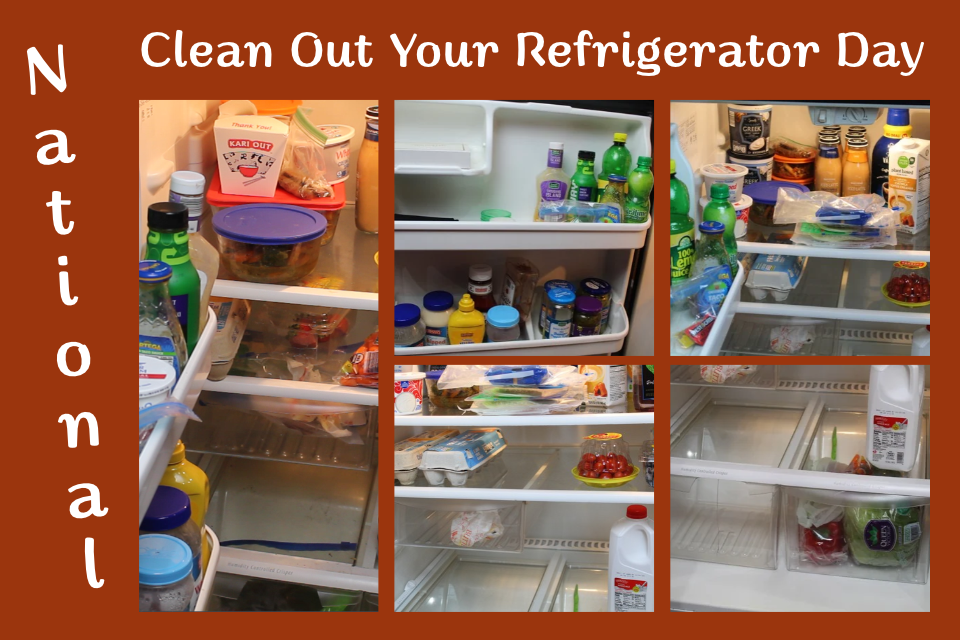
Why We Do It
Prep to Celebrate!
Traditionally, our family has done it monthly for years to get rid of anything going bad. Especially right before the holidays, we never knew there was an official day to celebrate: November 15th. A team of home economists at Whirlpool Home Appliances created the holiday in 1999 to inspire people to clear out the old and make way for new, comforting holiday food favorites.
Keeping Food Safe
Clearing out spoiled foods, forgotten items in the back of the fridge, and expired stuff helps reduce the risk of foodborne illness. Have you even checked the dates on those condiments that have been in the door for months or cleaned the nasty tops? We’ve all got at least one! So take 5 to 10 minutes, toss those 2 old strawberries and the expired tablespoon of sour cream in the container; make room for greens, turkey, mac and cheese.
How We Celebrate
Evacuate
Remove everything from the refrigerator and sort. If you plan to keep it, place it on one counter. Place anything rotten that you don’t plan to use, or recycle (compost, freeze, and reuse, etc.), on another counter.
Eliminate
Let’s start getting rid of the latter mentioned above: the trash. Grab your trash can and start loading it up. Hopefully, you don’t have too much, but if there’s a lot, consider other options like composting or transforming it for reuse.
Decontaminate
Time to thoroughly wipe every surface with a solution that’s as natural as possible and food-friendly. Here are a few options to get you going!
- Warm water & Dawn dish soap
- Equal parts water & vinegar + a small squirt of Dawn dish soap
- 2 Tablespoons Baking soda + hot water (works as an exfoliant)
- Hydrogen peroxide for stained spots
Vacuum Coils or Dust Can Accumulate
At least once a year, maybe even seasonally, try to integrate this into your fridge cleaning routine. It helps to improve energy efficiency, which extends the longevity of your fridge. Keep the compressor motor and fans cool by using your vacuum brush tool and gently getting the dust off your vents. Normally, this will be behind a vented kick plate or grill on the lower back of your fridge and an additional vent located at the very bottom front of the refrigerator, as this is to allow airflow. Check your manufacturer’s manual or their website for detailed information. However, y’all know you can always find a possible solution on YouTube, too!
Restock and Coordinate
Put everything you didn’t trash, plus the newly restocked items, back in the fridge and group similar items.
- Upper shelving: The upper shelf area undergoes very few temperature adjustments and is the safest space for ready-to-eat foods. It keeps prepared meals like leftovers, drinks, yogurts, cheeses, and deli meats safe from raw leaks.
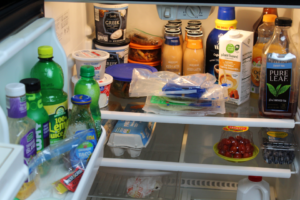
- Middle shelving: The shelf life of dairy and produce can be extended by placing them in the middle of the fridge, as the temperature is pretty consistent. So, that would apply to any prepped, washed, or cut produce (storage containers encouraged), egg cartons, and milk. Yep, we were today years old when we learned about the milk! So, make sure you put that top on tight before you have to lay it down properly on the shelf.
- Lower shelving: The safest location for raw proteins is going to be the coldest part of the fridge, toward the back of the fridge on the bottom shelf. Be sure to place your packaged meats on a tray or rimmed baking sheet, as the original packaging can always leak. If you have a bottom drawer allocated as your meat drawer, use that instead. If you’re storing multiple meat types, arrange from left to right by their cooking temperature.
- 145°: Whole seafood and cuts of beef, pork, or lamb
- 155°: Ground meats such as beef or pork
- 165°: Raw poultry, including chicken or turkey breasts and thighs
 Crisper drawers: If you have dual drawers at the bottom of your fridge – like us – then you want to designate one for whole, unwashed veggies and the other for whole, unwashed fruits. Crisper drawers help to manage the humidity, which veggies thrive in, so it keeps them fresh. However, fruits release a gas the longer they sit and ripen, which can affect veggies, causing them to spoil faster.
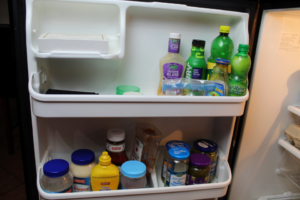 Fridge door: The fridge door is the warmest area in the fridge and endures a lot of temperature changes whenever the door is opened. Avoid storing your raw meats, milk, or eggs (even if you have the built-in egg slots). Keep that door space for items like pop (or soda), dressings, and condiments.